Drawbacks to Self-Publishing

Drawbacks to Self-Publishing

 

Paperbacks

Are there any drawbacks to self-publishing?

When working with mainstream publishers you write the book and the publisher controls everything: the editing, book design and formatting, ISBN, cover design, and publicity.

These days, though, the author has to be very involved with the marketing. The publisher handles the distribution and gets your book into bookshops and libraries. You wait for your royalties.

Benefits of a mainstream publisher


The benefits of producing a book with a mainstream publisher are:

  • the prestige you get
  • there is nothing upfront to pay
  • publisher takes care of everything
  • all being well, your book will be successfully distributed

BUT

  • you have to get accepted by a publisher
  • the publishing process is time consuming
  • there are complicated contracts
  • low royalty rates, and
  • limited creative control

Control

With self-publishing you are the one in control. You are the publisher.

It’s your responsibility to get your book edited, to get an ISBN, prepare the manuscript for publication, the cover design, the formatting, and the marketing.

Costs

The upfront costs of doing your own publishing are higher.

You will pay for services like editing, cover design and formatting. With traditional publishing these services are done by the publisher but when you self-publish the upfront costs rest with you – the author/publisher.

Team of professionals

 

team of professionals

When self-publishing you may need to create your own team of professionals to handle those aspects of publishing that you find hard, too difficult, or that you don’t want to do.

If your market is bookshops and libraries you will need to choose a platform like IngramSpark to get your book into libraries and bookstores. IngramSpark is set up to provide trade discounts and to work in with bookshops and libraries.  This is not so easy with Amazon.

The choice is yours. If you go with a mainstream publisher – congratulations!

The drawback to self-publishing is that you have to do all the work of publishing yourself. If you don’t want to do it all yourself you will need to pay to get a team of people to help you do it.

On the one hand this could be seen as a drawback or a disadvantage. On the other hand, you may like the challenge of having your own publishing house. The benefits are:

  • enjoying the freedom of creative control, 
  • staying away from complicated contracts, 
  • outsourcing the tasks you cannot do yourself 
  • building up your own team of professionals, and 
  • having the potential to make more money.

income

Marji Hill

Author and Coach


Join Facebook Group: Fast Self-Publishing Online

 

Book Cover Design Elements

Book Cover Design Elements


Book cover design

Book cover design is a book’s ultimate marketing tool. It’s like a billboard, its sole purpose being to attract the right readers to your creative masterpiece.

Indie authors are advised over and over again that they should get a professional to design their book covers. And I agree.


Sales tool

Book covers do help readers to make a buying decision because readers do in fact judge a book by its cover.  Readers very often buy a book because of how a cover looks so it’s quite obvious that the cover can make or break your book.

The cover is the first thing a reader sees.

A good cover is a marketing and sales tool because it helps capture a reader’s attention in a crowded marketplace and this can result in getting organic sales.


Attributes of good book cover design

Covers need to:

  • tempt the reader
  • arouse their curiosity
  • capture attention
  • be interesting
  • engaging
  • create an overall ‘feeling’
  • set the tone of a book so that your target audience takes notice.

Not only should a book cover design attract readers it needs to make an impact in small thumbnail size, as well.

5 key elements of book cover design


Book cover design

1.  Layout  

Book covers convey two key pieces of information — the book title (including the sub-title) and the author’s name. These core elements – the title and author’s name – together with imagery are organised in various ways on the cover. This is called layout.

The layout could simply involve the topography for the title and author name and can be the main imagery for the cover itself.  A photograph or some other illustrative material can be added to convey the theme or mood of the book.

The way that these core elements are combined, grouped and sized on the page comprises the layout.

2. Genre 

The genre has to be taken into account with book cover design. The design must be appropriate for the style of the genre.

Whatever genre you are in examine the best selling books in that genre and analyse how the covers have been done.

3. Image 

To help a prospective customer get a good idea and feeling for the book go for a strong focused image.

Create a simple, straightforward image. Avoid anything too fancy or complicated and opt for something that is more minimalist in style.

It’s important that the reader understands the message that is being communicated.

If there are too many elements in a book cover design, readers are not going to know what to focus on. And if they don’t know what to focus on, they are just going to skim over that book and move on to the next one.

When choosing an image for the book’s cover be mindful of copyright. You don’t want to fall into the trap of infringing copyright.

There are free images that you can use from sites like Pixabay, Flickr and Canva but still always check the licencing for any image that you use. Do not take images from Pinterest or Google and be aware that you might need to pay for an image.

4. Colour


Book cover design

Do not use too many colours in a book cover design. Just use two or three colours and colours that complement.

The best and most attractive covers usually only use a maximum of three different colours including black, white, or grey.

5. Font

Fonts can be design elements in themselves. The fonts you choose can be powerful elements that make your book stand out and look the best it can.

So key elements in book cover design are the layout of the core elements, genre suitability, image selection, colour, and font (or typography).


Marji Hill

Author and Coach


Join Facebook Group: Fast Self-Publishing Online

Can’t Get Started?

Can’t Get Started?


Many new authors can’t get started because they get stranded even before they commence to write their book.

Would-be authors might talk about the book they plan to write but often that is the end of it. They just don’t seem to be able to begin writing their book. 

For one reason or another, they talk themselves out of it or they just let their book idea fall by the wayside.

Some struggle to find the time to write. There are those who want to have the perfect writing studio. Others wait for the muse to magically appear. 

Or it’s something else. 

People find excuses – anything to avoid making a start. 

Time


Time

Time is a common challenge. 

If writing a book is truly important then you’ll find the time to write it. 

Let’s say today is the day! Today you will make a start on your book.

But suddenly another priority steps in the way and you are sidetracked by that.  Maybe you have to make sure that your writing space is perfectly clean and tidy, so you spend the next couple of hours making your writing space the perfect place to be.

Writing that day, today never happens.

Or there is something else that distracts you.

The solution is to prioritise what has to happen in your day.

Identify the core commitments of your day and rank them in order of importance.  

When you rank your priorities you will find time for your writing just so long as it is high on your list of priorities. 

Busy life


People’s lives are full of all the things they are obligated to do. The people who repetitively say they are “gonna write their book” lead active, busy lives. 

Many would-be authors never sit down long enough to focus on their writing and produce a manuscript. 

They overload their time and do everything else except what they say they want to do, and that is to write.

Life just gets in the way.


Do it later


Procrastination

Maybe you sabotage yourself by frittering away your time pursuing meaningless activities and time just slips by.

Procrastinators lose time by putting their energy into tasks that have lesser importance.

If you have a job you will show up for work every day otherwise you’ll be dismissed. You are not likely to say “oh” I really don’t feel like it today” and then fail to show up for work. 

You turn up to work, or else you will suffer the consequences.

Writers must make a commitment to themselves. You must show up at the appointed time to write.

Don’t let procrastination become more important than writing your book. 

Manage yourself.  Make an appointment with yourself to write.

Plan to write a set number of words each day and go for it.

Be disciplined, get motivated.

Self-doubt


A common downfall is a newbie author suffering doubt about their ability to write. They fear that they are just not good enough. They doubt their knowledge and worry that they don’t know enough. 

They fear what others will think of them; they worry that their friends and family will not be supportive.  

Identify your self-limiting beliefs and turn these self-limiting beliefs into positive affirmations. 

If you find yourself getting stranded at the start by not being able to get organised, not having enough time, putting things off to later, and being plagued by self-doubt then try to crystallise your reason to write. 

You can make it happen. If you develop the habit of writing daily, even for short bursts of time, productivity and creativity will happen.

Your inner drive will propel your creativity and you will be compelled to move forward. Nothing will stop you. 

Nothing will get in your way.

When you examine the reason for wanting to create a book many of the challenges like getting stranded at the start will disappear. 

Don’t wait for success to happen because, if you do, it’s going to be a very long wait. 

Take the initiative, seize control, create the opportunity, and make things happen.

Marji Hill

Author and Coach


Join Facebook Group: Fast Self-Publishing Online

 

FREE CONSULTATION

FREE CONSULTATION


Free consultation


If a free consultation on becoming a self-published author is of interest to you then consider these five signs. You will qualify for a consultation if any of these relate to you.

If any of them do then you need to talk with me.


  1. Are you feeling overwhelmed at the thought of becoming an indie author? 
  2. Are you feeling lost, and would like help getting started?
  3. Perhaps you are worried about your ability to go it alone and you are frightened and scared that you will mess up?
  4. Maybe you’d like personal guidance so that you can actually achieve your goal of publishing your own book?
  5. Are you worried about the expense of publishing your own book?

Challenges


Challenges in any of these 5 areas can reduce your determination and drive to become a self-published author.

If you want to:

  • enjoy the elation of having your first book published
  • learn about the possibilities of generating an income from writing books
  • be empowered as a result of being a successful indie author
  • be intoxicated with excitement when making that first sale
  • unlock your true potential as an author and self-publisher and make a dent in the world

If any of this resonates with you then my suggestion is that you book a free consultation with me. I’m offering a free consultation – a discovery call – for just 3 people.

I usually charge for a Zoom consultation. But today I’m making this special offer.

How do you go about booking a session with me?

Make a booking


STEP 1

Go to my booking link

https://marjihill.com/st1

This will take you to the special offer page for a 45-minute Discovery Call.

You will then select a date and time

STEP 2 

You will answer some questions so that I can understand a little bit more about you, what your goals and needs are so that I can then work out how best to help you

How will the consultation be conducted?

The call will be conducted via Zoom.  

I’ll then tell you how I can best help you and what the next steps are.

It’s that simple!

To remind you about the link…

It’s

https://marjihill.com/st1


Marji Hill

Author and Coach


Join Facebook Group: Fast Self-Publishing Online

Learn To Self-Publish

Learn To Self-Publish

If you want to learn to self-publish pay $ZERO for the first month of online lessons and then pay $47 a month for the next six months. This total amount of $282 gives you:

  • 28 weekly online lessons that educate, motivate and inspire
  • Ongoing monthly Q&A group sessions on Zoom that give you the support and friendship of like-minded people and access to me, your personal self-publishing coach
  • 12 months support in a private, members-only Facebook Mastermind group  

Be mentored and get community support as you are taken step-by-step through the self-publishing process.


  • If you are feeling lost and have no idea of how to get started with self-publishing 
  • If you lack the knowledge, or 
  • have a lack of faith in your ability to go it alone, or 
  • you feel that you just don’t have the backbone to start the self-publishing process, and
  • are fearful, scared and frightened that you will mess up

then jump onto this before it’s too late.

Learn to self-publish


Become A Self-Published Author

LEARN, APPLY and potentially EARN with these 28 weeks of lessons and when it’s over continue to access the monthly Q&A Zoom sessions.

The small investment of $282 that you make today is leverage for your dreams

  1. having your first book published is a dream come true
  2. realise the potential gateway to future income opportunities
  3. be empowered as a successful self-published author
  4. experience the most incredible feeling of euphoria when you make that first sale
  5. unlock your true potential as an author and self-publisher and make your dent in the world
  • Take joy in the ease of self-publishing, and you (not the traditional publisher) have control of your book and its revenue
  • Have the satisfaction of making sales, receiving royalties, and growing another income stream
  • Master the fundamentals of self-publishing on Amazon and
  • Experiencing the high self-esteem of being a successful author

And then, rinse and repeat – launch more titles on Amazon with even greater opportunities for earning a higher income

Love the excitement of marketing your book throughout the world

But you need to take action today

Who wants to self-publish?


It is for the first-time author who wants to :


  • complete the first draft of their book
  • self-publish their book
  • go it alone but who wants help and guidance along the way
  • self-publish cost-effectively
  • breakthrough the self-limiting beliefs that hold you back


It’s for the person


Become A Self-Published Author

  • who has the passion to write and self-publish their book
  • who is committed to investing in their education so that they can advance their knowledge
  • who wants to learn the fundamentals of publishing on Amazon so that readers will discover and buy their book
  • who has a positive mindset
  • who is prepared to take full responsibility for their outcome

How To Become a Self-Published Author


This home study program helps you to make it happen and gives you step-by-step guidance along the way.

Click the link today and get started.

ACCESS NOW

Remember, by joining today you get that first month for free.


Marji Hill

Author and Coach


Join Facebook Group: Fast Self-Publishing Online

Strategies For Making Money With Self-Publishing

Strategies For Making Money With Self-Publishing


Make money self-publishing

If writing books is your passion then here are twelve strategies for making money with self-publishing.

A frequent question I get is whether you can generate an income from writing books and self-publishing?

Like any industry there are the winners and the losers. There are those who make millions and then there are those who just make a little pocket money or even no money at all.

Multiple streams of income can be made from self-publishing, marketing, and selling your books. However, if you just publish your book and neglect to promote and market it then you will struggle to generate any income.

12 Strategies


Here are just 12 strategies for earning income streams.


Make money self-publishingWith Amazon, you can earn up to 70 per cent in royalties. This is a really decent return for almost any business venture!

But just because your book is on Amazon or the IngramSpark platform doesn’t mean it will automatically sell.

You have to get the word out about your book. You need to let people know that you have a book for sale, how the book will benefit your market, and where they can get it.

As I talk about my most recent publication I am asked all the time – “Where can I get it?”

Because you have written a book you can earn from making regular book sales, and you can earn selling a related business product or service.

Income streams

  1. Market your book on Amazon in Australia and enjoy having the royalties (35-70%)paid directly into your bank account
  2. Market you book in other Amazon market places like the United States, United Kingdom, Canada, Germany, Italy, Mexico – wherever Amazon has a marketplace
  3. Earn an income on Amazon for lending your book
  4. To maximise your income satisfy the market by publishing your books in different formats – Kindle eBooks, paperbacks, hardcopies, audiobooks
  5. As well as Amazon put your book on the IngramSpark platform and have it distributed  through 40,000 channels throughout the world
  6. Australian book stores buy via IngramSpark so watch your sales on your IngramSpark dashboard
  7. Australian libraries buy via their library suppliers who in turn buy from IngramSpark
  8. Once your books are in public and educational libraries you may be eligible for Public lending Right(PLR) and Educational Lending Right(ELR) so you can get paid once a year by the Australian government. The more books you have in the libraries the more you get paid
  9. Publishing a book helps your credibility and reputation so it’s possible to become a speaker and be paid to speak at conferences and conventions
  10. Develop and sell an online course that relates to your book
  11. Set up an eCommerce website with a shopping cart and sell books directly from your website
  12. Keep a stock of books on hand and be ready to sell them directly to people in your network

There you are – 12 strategies for earning income from self-publishing your books.

I wish everyone a very Merry Christmas and a rewarding, safe and profitable 2022.


Marji Hill

Author and Coach

Join Facebook Group: Fast Self-Publishing Online

Inspired by Country: a Book

Inspired by Country: a Book


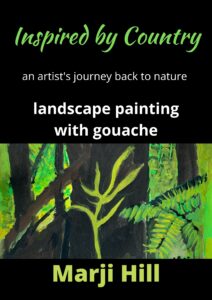
Inspired By Country: An artist’s journey back to nature landscape painting with gouache is my latest book. It celebrates creativity, and in the process teaches creatives the essential elements of painting Country with gouache. 

Inspired by Country

Gouache

Other names for gouache paint are gouache water colour or opaque water colour. Gouache is not dissimilar to water colour paint because you mix it with water and the brushes are cleaned with water.

Back to nature

In this book you are taken on a journey back to nature specifically to the Springbrook National Park in southeast Queensland. Here you are introduced to the concept of plein air painting and you     

  • learn the art of painting compelling outdoor compositions to create beautifully expressive subjects and themes
  • learn time-honoured techniques of painting with the most versatile, daring and expressive of mediums – gouache.
  • get a snapshot of Australia’s antiquity and how Indigenous Australians responded to Country through art and ceremony
  • and, escape day-to-day existence and experience mindfulness at its best

In my experience of how I perceive Country I  have moved away beyond the Anglo sphere to a mindset that has a heightened awareness of what Land means in this country of Australia.

It is not just learning about Aboriginal culture it’s about learning through Aboriginal culture, embedding Aboriginal perspectives into the psyche, and developing awareness of and acknowledgement of the traditional custodians and their long and continuing relationship with Country. It’s a recognition of the Law of the Dreamtime. 

Painting Country and getting inspiration from a place like the Springbrook National Park is a journey back to nature and in the process this takes you into another world.

Rainforest painting by Marji Hill

Mindfulness

At one level it is a rewarding, artistic experience which can be full of joy, a healing, and adventure. At another level it is mindfulness in practice.

We escape our day-to-day existence, we centre ourselves, and we are taken into a realm that is calm and focussed.

We contemplate the beauty of Country; we have an in-depth experience that takes us into our inner world. This is mindfulness. 

Our emotions are stimulated, fresh ways of thinking open up, and we enjoy simply being.

Australia’s antiquity of art

In addition, visual representations of Country have been going on in Australia for probably much longer than 65,000 years. They are part of an ancient tradition of art making in Australia.

This long and ancient tradition of being inspired by Country and painting Country has a shared history with the more recent European tradition of what is called en plein air. Within this context I’ve shown how our perception of Country can be enriched by understanding the religious, and innate connection to and knowledge of land.

Inspired by Country is beautifully illustrated with my own paintings. It’s perfect for all artists who want to paint in the open air and it’s for those who want to understand that art making outdoors in Australia springs not only from an Impressionist tradition but from Australian antiquity as well.

A Sculptured Country by Marji Hill

Be inspired by Country, appreciate its historical and cultural implications, and experience it beyond the simple visual perspective.

Marji Hill

Author and Coach


Join Facebook Group: Fast Self-Publishing Online

How To Market Your First Book

How To Market Your First Book


Marketing a book is complex and learning to market your first book can be overwhelming. Authors freak out about it.

Many authors just want to write and do not want to bother with being involved in the business side of their writing. But the reality is if you want to be a successful creative, marketing is essential.

Those very first steps

What might be the first few steps for getting started with marketing your book?

You are a first-time author, yes? You are starting out with no track record, yes? Then you need to be inventive to get the word out about your book.

Who is your book for? Does your book have a defined market? Who do you think would want to read or buy your book?

1. Start an email list

Ask yourself – who do you know in your own circle of influence that might be interested in learning about your book and possibly purchasing it?

Names list

Brainstorm and come up with a list of names. 

  • People you know in your immediate circle of influence
  • Friends on Facebook
  • People in groups you are part of
  • People with whom you share common interests.

Make a list of their names, email addresses, and mobile phone numbers. Double-check with these people that they are happy for you to have their details. Also, check that they are happy for you to contact them either by email or by phone.

You are doing this before you even get into the business of email marketing with an autoresponder and associated legal issues to do with privacy laws.

I’m simply suggesting that when you want to market your first book take baby steps to get the word out.

Once you’ve started with a list send a personal email to these people telling them about your book. Don’t forget to provide a link as to where they can buy your book.

Do not at this stage send out a bunch of emails in a group; they might just end up in the recipient’s junk mail and you don’t want this to happen.

Keep these first emails very friendly and personal.

Once you’ve started a names list you can then graduate to setting up an email marketing platform with a website or landing page, an autoresponder and a lead magnet to capture more leads.


2. Have a book launch

When starting in self-publishing authors are usually interested in one thing – sales. By taking those first few baby steps offline it is possible to get immediate sales.

book sales

Organise a book launch. This could be as simple as inviting a few people to your home to tell them about your book or you might even meet at a coffee shop or club.

A book launch can range from a simple, low key gathering in the home to a more formal event held at a public venue.

Book launches, book signings, author talks, author interviews on community radio, promotional flyers, and personal networking are proven and tested methods for marketing your book which can be leveraged to your advantage once you focus on your target audience.

Other methods of marketing

After you’ve taken these first baby steps in the offline space you can start exploring other methods of marketing. Build your author platform but this will take time. It’s not something that happens overnight.

Building a website

Your website is your hub from where you communicate with your readership. You’ll set up a lead magnet, have an autoresponder, write blog posts, and send out broadcasts to your email list on a regular basis. You’ll include an author bio, a sales page, social media links, blog posts, and contact details.

Get reviews

You’ll be wanting to get reviews both editorial reviews and customer reviews for social proof.

Social media

A social media presence is important with a Facebook page, a possible Facebook group, being part of other Facebook groups, LinkedIn, Twitter, Pinterest.

You may be interested in setting up a YouTube channel or starting a podcast.

Pre-publication marketing

An area commonly neglected by first-time authors and which starts prior to writing the book is Market Research. Make sure you are writing a book that has a potential market. You don’t want to go to all the effort of producing a book only to discover that no one is interested in your book. It has no market.

Other prepublication marketing tips include designing a stunning cover, deciding on a keyworded title, and paying attention to an attractive interior. There is the business of selecting appropriate metadata like the title, categories, keywords and book description.

If you brainstorm all the various ways you can go about marketing your book it is possible to come up with at least 40 if not more methods. It is too overwhelming to cope with all of them at once.

When starting out keep it simple by taking baby steps. The best place to start is with your immediate circle of influence.

Master one marketing method at a time. Then move on to the next. Over time as you learn you will grow your repertoire of marketing methods and find out what works best for you.

To learn more about writing, self-publishing, and marketing your book ACCESS HERE the How To Become A Self-Published Author subscription program which consists of weekly online lessons that educate, motivate and inspire.

Marji Hill

Author and Coach


JOIN FACEBOOK GROUP

Fast Self-Publishing Online

13 Book Editing Tips For Insiders Only

13 Book Editing Tips For Insiders Only


The first draft of your manuscript is finished so probably you’ll be in need of some book editing tips. You now need to focus on editing and wonder if the manuscript should be given to a professional editor?

Along the way you’ve tried to reduce the mistakes in your text but it has been a daunting experience. You’ve not realised that there are methods for editing your own work.

You could have done with some editing tips early in the piece.

Go through the process of self-editing before handing your book over to a professional editor. Get your manuscript to an advanced level and then you’ll be able to reduce your editing costs.

In addition the exercise of self-editing will make you more sensitive to editorial issues and this in turn will help you to improve your writing next time round.

self-edit


Here are 13 tips for self-editing your manuscript.

Tip 1 – Print the manuscript

Once you have completed the first draft of your manuscript print it out. This way it looks more like a physical copy of your book.

Tip 2 – Take a rest from your manuscript

Put your manuscript away. Lock it in a drawer or filing cabinet and leave it there for a week or two. Do not look at it. Give yourself a rest from the project.  

Tip 3 – Structure

After taking the break look at the manuscript with fresh eyes. First of all, examine its structure. Check the order of the chapters. Ensure there is a logical sequence.

Sections of text may need to be rewritten to make the writing more clear. The text must flow taking the reader logically from one place to the next so that they have a transformational experience.

Watch out for repetition. Keep sentences simple and straight forward. You want your message to be easily understood and precise.

Tip 4 – Check facts

Your facts might need to be substantiated by referring to the source of your information. Document your sources immediately and put these references into a section at the end of the chapter or at the end of the book.

It is important to document your sources as you write. Avoid neglecting this otherwise you could have insurmountable challenges later on like not being able to remember the source of the information.

Tip 5 – Editing grammar

Become acquainted with the most frequently used rules of grammar and writing style before you start writing. Minimise bad grammar and correct grammatical errors

Be on the look out for errors in syntax, punctuation,  capitalisation, hyphenation and eliminate unnecessary adjectives and adverbs.

Tip 6 –  Sentences

Rewrite sentences if they are long and ungainly. You want them to be short, straight forward, and to the point.

Tip 7  – Remove repetitive words

Writers tend to overuse certain words. Remove the ones that you overuse and consult Roget’s Thesaurus to help you to find fresh and alternative words.

Tip 8 – Hold reader attention

To hold the attention of the reader format your text to make it reader friendly. Use sub-headings to break up the chapters.

Tip 9 – Editing software

Run your manuscript through some editing software like Grammarly to identify passive voice, repetitive words, incorrect comma usage, typos, and bad sentence structure. There is even a plagiarism checker.

Tip 10 – Read book aloud

You will identify more errors by taking the time to read your book aloud.

Tip 11 – Rework manuscript

Once you’ve done a second draft give yourself another break from your manuscript.  Put it away and come back to it sometime later. Then start reworking the third draft and fix all the errors.

Tip 12 – Beta readers

Give your manuscript to a few trusted beta readers. Get their feedback because they will enviably see mistakes that you have missed.

editing

Tip 13 – Proofread

Once you have fixed more errors proofread your manuscript.

Learning how to self-edit your manuscript is not an easy task. However, it is worthwhile doing the hard yards even if it is laborious.

By going the extra mile working on your manuscript you will publish something for which you will be proud.

The final stage in editing is to give your manuscript to a professional editor who will fine tune it and make your manuscript the best it can be.

To learn more about writing, self-publishing, and marketing your book ACCESS HERE the How To Become A Self-Published Author subscription program which consists of weekly online lessons that educate, motivate and inspire.

Marji Hill

Author and Coach


JOIN FACEBOOK GROUP

Fast Self-Publishing Online

Advantages Of Print On Demand

Advantages Of Print On Demand


November 2007 put an end to the high costs of self-publishing with the advent of Amazon’s Kindle Direct Publishing (KDP). From this time on the advantages of Print on Demand(POD) revolutionised the publishing industry.

Traditional publisher

Up until this point, the first option for getting a book published was to negotiate a publishing deal with a traditional publisher with the likes of Macmillan, Angus & Robertson, Allen & Unwin, Heinemann among many others.  

Self-publish

The second option was to self-publish. This meant finding a printer to do a large print run and then having to distribute and sell the books yourself.   

This old method of self-publishing meant risking $20,000, $30,000 or even more to self-publish a book. 

If you had surplus funds to invest and you were prepared to risk that money then fine. But many authors were fearful of risking thousands of dollars to do a large print run. 

You needed to get a return on the investment. Naturally, for many authors, this was a fearful thing to do. What if you didn’t succeed in getting your books sold?

If the author did not sell their books thousands of copies could end up sitting in boxes and boxes taking up space in the garage or someone else’s garage. 

I saw this happen so many times. I even used to store boxes of books belonging to other authors in my own home.


Print On Demand

A changed publishing landscape


The publishing landscape had changed.

  • No more did authors have to get past the gatekeepers to land a traditional publishing deal.
  • No more did authors have to self-publish and do a large print run.
  • No more did authors have to face the high costs of getting their book designed, formatted and book cover made
  • No more did authors have to invest in a large print run, then face the issues of storage, and how to get a return on investment

Advantages of Print On Demand


The concept of print on demand(POD) transformed the publishing world. Instead of investing large sums of money for giant print runs POD meant you could order and print just one book, or ten books, one hundred books or more. If you wanted just two paperbacks, for instance, you could order just the two.

Very simply the POD model allowed you to order a book, print a book, and be able to do this one at a time.

Amazon had set up two publishing platforms. 

Kindle Direct Publishing (KDP) was Amazon’s eBook publishing platform and its CreateSpace used the POD model for paperbacks. In 2018 CreateSpace, however,  merged into KDP so from that time on you could publish both Kindle eBooks and paperbacks on KDP.

POD eliminated the need to invest thousands of dollars doing large print runs. Substantial economic barriers had been removed and authors could publish their books on a low budget, as low as $200 or less, or even for nothing at all. 

With the POD model, authors could market their books throughout the world, sell their works, and not have to worry about holding inventory, storing books, or monitoring stock levels.

Benefits of Amazon


One of the great benefits of publishing on Amazon was its domination of the world book market. Customers were there ready to buy and pay for books with their credit cards. 

With just a click a Kindle eBook was delivered immediately to the free Kindle app on their computer, iPad or smartphone. Because of Amazon’s Expanded Distribution, both paperbacks and eBooks had access to global markets through the Amazon distribution channels.

Royalties were high – 70% for Kindle eBooks and 60% for paperbacks. Authors retained their rights, their books were published within hours, there was no need for inventory, and book cover and design tools were supplied. 

While there might be some costs involved for the preparation of eBook and paperback manuscripts there was zero cost for actually publishing your work on Amazon. These benefits made publishing on Amazon a no brainer.

The concept of POD transformed the way you could publish a book.

Amazon was the game-changer.

Print On Demand is affordable


Print On DemandWith POD, the costs associated with having inventory had gone. It was affordable, it was efficient, and you had the freedom of printing anywhere from one (1) to ten thousand (10,000) copies of a particular title.

Keeping your book in print is these days an outdated concept. With POD your book remains in an online database and it is only printed when it is required.

Given the escalation of interest in the new way to publish multiple companies, products and services are flourishing throughout the world that is specifically designed to service this new self-publishing industry.

Marji Hill

Author and Coach


JOIN FACEBOOK GROUP

Fast Self-Publishing Online


1 7 8 9 10 11 15